
Industrial Security Checklist for Factories and Manufacturing Units in Pune
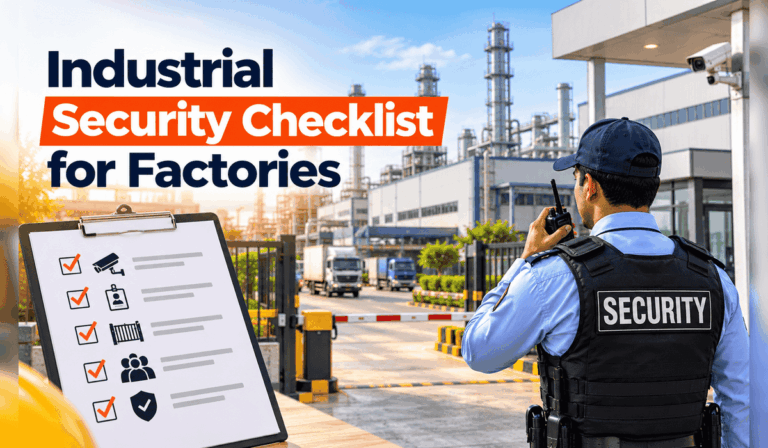
Industrial security is essential for protecting employees, machinery, raw materials, finished goods, and daily manufacturing operations. Whether you operate an automobile manufacturing plant, engineering factory, warehouse, or industrial unit, a structured security system helps reduce theft, unauthorized access, and operational disruptions.
Manufacturing hubs such as Chakan MIDC, Bhosari MIDC, Pimpri-Chinchwad, Talegaon, and Ranjangaon have diverse industrial security requirements. Factories in these locations often manage multiple shifts, heavy vehicle movements, contractors, visitors, and valuable inventory.
However, industrial security involves more than deploying guards at the main entrance.
A comprehensive security strategy combines trained personnel, access control, visitor management, surveillance, emergency preparedness, and regular monitoring.
This practical checklist will help factory owners, plant managers, and facility managers evaluate their existing security arrangements and identify areas requiring improvement.
Why Is Industrial Security Important for Manufacturing Units?
Manufacturing facilities face security challenges that differ from those of corporate offices and commercial buildings.
Factories often operate around the clock, manage expensive equipment, and receive frequent deliveries from suppliers and logistics partners.
Without effective security procedures, businesses may experience:
- Unauthorized entry into restricted areas
- Theft of raw materials and finished products
- Unverified movement of vehicles and goods
- Security gaps during shift changes
- Poor visitor and contractor monitoring
- Delayed responses to emergencies
- Inadequate documentation of incidents
Professional security services in Pune help businesses establish structured security procedures to address these risks.
The goal is not simply to prevent incidents but also to support safe, uninterrupted manufacturing operations.
10-Point Industrial Security Checklist for Factories
- Secure All Entry and Exit Points
Factory gates are among the most important security checkpoints.
Every manufacturing facility should have clearly identified entry and exit points for employees, visitors, contractors, and commercial vehicles.
Security checklist:
- Deploy trained security guards at designated gates.
- Verify employee identification before entry.
- Maintain visitor and contractor entry records.
- Monitor vehicle entry and exit.
- Restrict unauthorized access to factory premises.
- Establish procedures for handling suspicious activities.
Large manufacturing units may benefit from separate entry arrangements for employees and logistics vehicles.
Facility Manager Tip: Review gate security procedures during shift changes, when employee and vehicle movement may increase.
- Implement Visitor and Contractor Management
Factories regularly receive maintenance contractors, suppliers, delivery personnel, auditors, and business visitors.
Uncontrolled visitor movement can create security and workplace safety risks.
An effective visitor management process should include identity verification, visitor registration, authorization from the relevant department, temporary identification passes, and exit recording.
Contractors working near machinery or hazardous areas should also follow applicable site safety procedures.
Security personnel must understand which areas visitors can access and when an authorized escort is required.
- Monitor Raw Material and Finished Goods Movement
Material theft and unauthorized inventory movement can cause financial losses and operational disruption.
Manufacturing units should implement a documented material gate-pass system.
Key checks include:
- Verify material gate passes against approved documentation.
- Check vehicle details and delivery records.
- Record incoming and outgoing material movement.
- Confirm authorization before releasing goods.
- Report discrepancies to the designated department.
Security guards should coordinate with stores, dispatch, and logistics teams rather than independently approving material movement.
- Maintain Perimeter Security and Regular Patrolling
Industrial facilities may have large boundaries, multiple buildings, storage yards, and isolated areas.
Poor perimeter security can create opportunities for unauthorized access.
Factories should inspect boundary walls, fencing, lighting, emergency exits, and vulnerable access points.
Regular patrolling can help identify unusual activity, damaged barriers, and security concerns.
Patrol routes and frequency should be based on a site-specific risk assessment.
For manufacturing units in Chakan and Pimpri-Chinchwad, large industrial layouts may require clearly assigned patrol responsibilities and reporting procedures.
- Install and Monitor CCTV Surveillance
CCTV systems support industrial security by improving visibility and providing records for incident investigations.
Important surveillance locations may include:
- Main gates and vehicle entrances
- Loading and unloading areas
- Warehouses and storage facilities
- Perimeter access points
- Common corridors
- Other designated high-risk areas
However, CCTV cameras should complement trained security personnel rather than replace them.
Businesses should also establish procedures for camera maintenance, authorized access to recordings, retention periods, and applicable privacy requirements.
- Strengthen Security during Night Shifts
Many manufacturing facilities operate in two or three shifts.
Night operations may involve reduced administrative staffing, limited supervision, and movement through isolated areas.
Factories should establish clear night-shift security responsibilities.
These may include gate monitoring, scheduled patrolling, supervisor communication, incident escalation, and emergency coordination.
Businesses seeking security services in Chakan should discuss shift coverage, guard deployment, and replacement arrangements with their security provider.
A documented handover between shifts helps maintain continuity and accountability.
- Prepare for Fire and Emergency Situations
Security personnel often play an important supporting role during workplace emergencies.
Factories should have documented emergency procedures covering fire incidents, medical emergencies, unauthorized entry, and other site-specific risks.
Security guards should understand:
- Emergency contact and escalation procedures
- Evacuation routes and assembly points
- Fire alarm reporting procedures
- Access arrangements for emergency vehicles
- Communication with authorized emergency-response teams
Security personnel should receive appropriate training for their assigned responsibilities.
Important: Security guards should not be expected to perform specialized firefighting, rescue, or hazardous-material response without the necessary training, equipment, and authorization.
- Verify Security Guard Training and Background Checks
Deploying security guards without appropriate verification or training can create avoidable risks.
Before hiring an industrial security agency, evaluate its recruitment, training, and verification procedures.
Check whether guards are trained in access control, visitor management, patrolling, incident reporting, emergency communication, and workplace discipline.
Security agencies should also follow applicable requirements under the Private Security Agencies (Regulation) Act, 2005 (PSARA), relevant Maharashtra rules, and other applicable regulations.
Businesses should verify the agency’s licence and relevant compliance documentation before signing a contract.
- Establish Incident Reporting and Security Audits
Every factory should maintain a process for documenting and reviewing security incidents.
Examples include unauthorized entry attempts, missing material, suspicious activity, damaged security infrastructure, and breaches of access procedures.
A structured incident report should record:
- Date and time of the incident
- Location and nature of the issue
- Personnel involved
- Immediate actions taken
- Responsible reporting authority
- Follow-up and corrective actions
Periodic security reviews help facility managers identify recurring problems and improve preventive measures.
For businesses using contract-based security services in Pimpri Chinchwad, reporting frequency and escalation responsibilities should be clearly defined in the service agreement.
- Review Security Manpower and Agency Performance
Even a well-designed security system requires regular performance evaluation.
Factory managers should periodically review whether the deployed security manpower matches operational requirements.
Important considerations include facility size, number of gates, shift timings, vehicle movement, patrol routes, and identified security risks.
Monthly security performance checklist:
- Review guard attendance and shift coverage.
- Check incident and visitor records.
- Evaluate gate-pass compliance.
- Review patrolling documentation.
- Verify training and refresher requirements.
- Discuss operational issues with the security supervisor.
- Update security procedures when facility operations change.
These reviews help businesses maintain consistent security standards.
How to Choose Industrial Security Services in Pune
Selecting a professional security partner requires careful evaluation.
Before finalizing an agency, factory owners and procurement teams should consider five essential factors.
Industry experience: Does the provider understand manufacturing facilities, warehouses, and industrial operations?
Legal compliance: Does the agency hold the required PSARA licence and maintain applicable statutory records?
Trained manpower: Are guards trained for industrial access control, visitor verification, and emergency reporting?
Supervision: Is there a defined process for site inspections, incident escalation, and performance monitoring?
Contract transparency: Are staffing requirements, shift timings, replacement arrangements, and service charges clearly documented?
A facility assessment before deployment can help determine the appropriate security arrangement.
Protect Your Factory, People and Assets with R3S.
R3S Industrial Security Services in Pune, Chakan and Pimpri-Chinchwad
At R3S Industrial Secure Solutions Pvt. Ltd., we understand that factories and manufacturing units require security arrangements aligned with their operational environments.
Our professional security guard services support industrial and commercial establishments with contract-based security manpower solutions.
Businesses looking for security services in Pune, Pimpri-Chinchwad, or Chakan can contact R3S to discuss their site requirements.
Our industrial security service scope can be planned around:
- Factory gate security and access monitoring
- Visitor and contractor verification
- Material and vehicle movement monitoring
- Security patrolling responsibilities
- Shift-based security manpower
- Incident reporting and supervision requirements
Deployment arrangements depend on site requirements, agreed responsibilities, and manpower availability.
Frequently Asked Questions
- What security services are essential for manufacturing factories?
Factories commonly require gate security, employee access control, visitor management, vehicle verification, material movement monitoring, perimeter patrolling, and emergency reporting procedures.
- How many security guards does a factory need?
The number depends on factory size, operating shifts, entry points, vehicle movement, patrol requirements, and site-specific security risks. A security assessment helps determine suitable manpower deployment.
- Why should factories hire professional security services in Chakan?
Professional security services can help manufacturing units establish structured access control, monitor visitors and vehicles, maintain security records, and support incident reporting.
- Is a PSARA licence necessary for security agencies in Pune?
Yes. Private security agencies must comply with applicable PSARA licensing requirements and relevant state regulations. Businesses should verify the provider’s licence before hiring.
- Can factories hire security guards on a monthly contract?
Yes. Industrial security agencies commonly offer contract-based security manpower arrangements based on shift timings, guard requirements, responsibilities, and agreed service terms.
Conclusion: Strengthen Your Factory Security with the Right Partner
Industrial security is an ongoing responsibility that requires trained personnel, effective monitoring, clear procedures, and regular performance reviews.
By following this checklist, manufacturing businesses can identify security gaps and strengthen protection for their employees, property, and operations.
Whether your factory is located in Pune, Chakan MIDC, Bhosari MIDC, or Pimpri-Chinchwad, choosing a reliable security partner is an important step toward maintaining a safer workplace.
Looking for Professional Industrial Security Guard Services in Pune?
R3S Industrial Secure Solutions Pvt. Ltd. provides contract-based security manpower solutions for factories, manufacturing units, warehouses, and commercial facilities.
Contact our team to discuss your security requirements and request a customized quotation.
Get a Free Security Quote